muscular dystrophy

This Crip Stays in the Picture: A Past Plaintiff on Opposing H.R. 620, the ADA Notification Act

This crip is staying in the picture of ADA litigation.
I’m Ingrid Tischer. You may remember me as “headless female torso using a walker” from Anderson Cooper’s “ADA Hit-Piece of Horror” on 60 Minutes. But I’m here today to tell you about a different type of horror: Being a plaintiff in an Americans with Disabilities Act (ADA) lawsuit, in which you’re presumed greedy and where whatever happened to you was no more than an inconvenience.
Four years ago, I began a multi-year metamorphosis into “non-vexatious litigant wanting to use a toilet.” That makes me the face of ADA lawsuits. But, in the 60 Minutes segment and the continuing slew of hand-wringing pieces about ADA scam-artists, you don’t see any faces like mine. A face like mine disrupts the narrative of the selfish — or gullible — cripple who financially kneecaps overwhelmed small business owners over access technicalities. You don’t hear much about how the proposed H.R. 620 would also apply to our considerably larger corporate citizens. So I’m putting my face right out there. This crip stays in the picture.
Despite the media’s fixation on “drive-by litigation,” — a completely non-accidental choice of phrase that associates fighting for my civil rights with gang violence – I was using the ADA as it was intended to be used, and should be used. As a civil rights law that, in 1990, made me a full US citizen at the age of 25. But in addition to the external changes in public spaces that have literally opened doors for me, the ADA is responsible for a profound internal shift in my thinking: I have expectations now that I didn’t grow up with: that I can enter a store, eat at a restaurant, cross a city street, open my office door.
#IAmaPreexistingCondition Says NO to #AHCA and YES to Protecting People Not Profits
Call, email, use social media to tell your Senators to vote NO on the AHCA:
Sample Script: “My name is ________________, and I’m calling to tell you that I oppose, and expect you to oppose, the American Health Care Act. We’re not going back to a pre – ACA era where insurers could ignore the needs of people with disabilities and pre – existing conditions and everyone was one medical emergency away from bankruptcy. If you value the health and well – being of your constituents, you must speak and vote against the AHCA.”
Transcript:
My name is Ingrid Tischer and I live in California.
My pre-existing condition is muscular dystrophy with chronic respiratory failure.
Without healthcare coverage for preexisting conditions, I wouldn’t have a machine called a Bi-PAP S/T and I would have died in my sleep a long time ago from carbon dioxide narcosis.
I wouldn’t have been able to keep walking for as long as I did because I wouldn’t have had orthotics.
I wouldn’t have been able to transition to a wheelchair when I finally needed to.
Because of this, I would tell my senators to vote NO on the AHCA and against any legislation that protects profits over people.
Including people with preexisting conditions.
I am a preexisting condition.
Thank you, Rooted in Rights and National Council on Independent Living (NCIL)!
#CripLit Chapter 2: Funktionslust
 There was no way Alice had fit all that into one suitcase. Gretchen accepted the coffee but waved off questions about her sore throat. She rocked thoughtfully as Alice fretted about her being too ill for the clinic visit later in the day. “Mom? You’re looming.”
Before I Resist and Persist, I Must Exist: Bioethical Choice, Living “Like That,” and Working the Early Shift of Cleaning Up Ableist Narratives
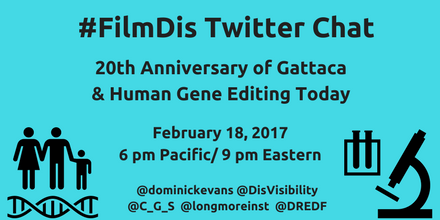 I represented DREDF in this conversation but it’s stirred up a big case of the feels about “choice” and being a liberal woman writer with a congenital disability, and the context this establishes for storytelling, and resisting and persisting. I continue, after 30 years of adult activism, to feel like I have an early shift of ableism — prepping the world to accept that I exist — while my nondisabled fellow human resisters and persisters get to sleep in. And if I weren’t white, conventionally educated, cis gendered, unthreateningly queer, and had all sorts of middle-class, married advantages, I’d probably never sleep at all. Image courtesy of the Disability Visibility Project.

Step 1: I Exist!
As many people who know me know — all too well — I’ve been writing a novel* for the past 400 years or so. The novel, The Cure for Gretchen Lowe, is the exploration of a what-if premise: What if a congenitally disabled woman were offered an experimental therapy that would cure her? The cure itself, Genetic Reparative Therapy (GRT), was never the point of the story because biomedical research, real or invented, never seemed like the most interesting part of the story. What I’ve been stuck on, like an oyster (or barnacle), since the idea first irritated my imagination was how I saw that my character’s situation began as a will-she-or-won’t-she question. From what I’ve observed in 50+ years of congenitally disabled life, that question isn’t typically a question to The Average Reader. “Well, of course a person like that would want GRT!”
I’ve considered that point of view quite a bit — 400 years allows for that — and much more seriously than I make it sound here. But that assumption also irritated me mightily: As a lifelong like-that-ter, I’ve run up against a lot of nonconsensual of-coursing when it comes to my bioethical choices. Simply opening my story — which I refer to as being “CripLit” — with a genuine choice, not a pro forma one, felt like I wrote in letters across the sky: I EXIST.
 Tales From the Crip