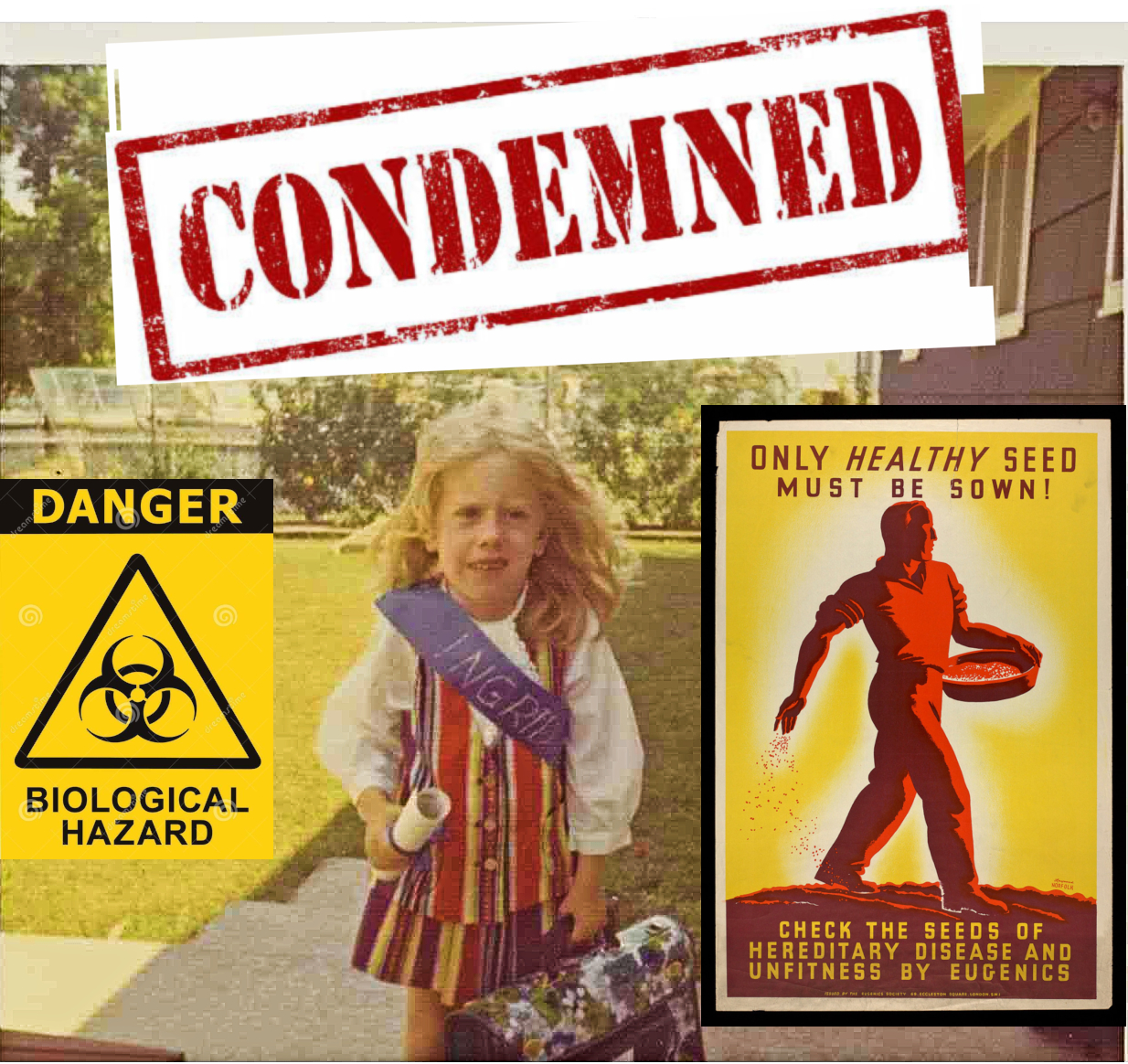

I’m FEDup with “debates” about my sexuality, my reproductive choices, my existence. There is so much to love about social media and one of those reasons is the experience of going on Twitter to quickly check my popularity see what I can do to better the world and finding an objective discussion underway regarding whether someone like me should be “allowed” to reproduce. The person who asked the question may not even understand that, by placing my reproductive choices and existence within the frame of public approval, they’ve reinforced bias against me, a woman with a congenital disability who lives “like that.” Check out another guy who asks rational questions just like you did.

I’m not answering on Twitter because — unlike when I was in my 20s, 30s, 40’s — I no longer feel required to justify my existence just because somebody decided to have an “objective” “discussion” about whether I’m really worth the hassle.
Yup, even when your purpose is ostensibly positive, how you frame the conversation matters. Growing up with muscular dystrophy means I’ve heard more times than you can imagine that my particular disability places me — of course! — on The List of Lives That Suck. What’s newer or less personal to you is very different to me as a woman with a congenital disability. So here’s an excerpt from a longer past post that elucidates where I’m coming from. Continue reading
What would be a “threat of self-harm” for you, is a “personal choice” for me.
What calls for an intervention for you, calls for a pre-suicide party for me.
Your movie is It’s a Wonderful Life. My movie is It’s a Wonderful Death.
When it comes to people like me, suicide is rapidly becoming normalized. Or more exactly, suicide is being erased through re-branding. “It’s not ‘suicide’! It’s ‘ending your life on your own terms’!”


 Tales From the Crip