I’m Not Finished: Corn on the Cob, Greece, NY; Late July 1970

Photo of 2 blue and white dinner plates. Text: I'M NOT FINISHED, a personal encyclopedia gluttonica by Ingrid Tischer talesfromthecrip.org

Image courtesy eBay

The question of whether early gluttony for, say, corn on the cob is an innate or acquired trait is just the sort of debate that misses the point entirely. To paraphrase the elegant  MFK Fisher: When I write about gluttony, I am writing about a gluttony for joy, a gluttony for excellence, and — frequently — a gluttony for any foodstuff bathed with melted butter.

A beautiful ear of fresh bi-color corn still half in the husk


Continue reading

Your 3-Point Take-Down of the ADA Education and Reform Act of 2017, or Why Your Representative Should Vote NO on HR 620

Here’s how to tell your Congressional Representative to OPPOSE H.R. 620, and any other bill that weakens the ADA! 

Here’s your 3-point take-down of the central flaw in HR 620:

Point #1: HR 620 claims the ADA is so easy that a random person should carry the responsibility for teaching corporations how to obey the ADA, aka civil rights law.

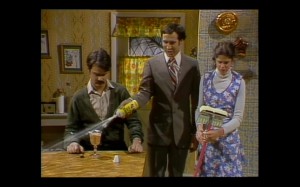
Color still from Saturday Night Live. A parody commercial for Shimmer Floor Wax. Chevy Chase is spraying Shimmer on Dan Ackroyd's pudding while Gilda Radner looks at the Shimmer on her mop.

“HR 620 is BOTH!” Courtesy NBC Universal.

Point #2: HR 620 claims the same ADA is too hard for corporations to learn how to obey.

Point #3: HR 620’s claim to be both a floor-wax AND a dessert topping isn’t reality-based.

Failing the reality test makes HR 620 a NO vote

Tell your Representative to vote NO on HR 620 because even when a corporation is suffering from the heartbreak of toohardism, sabotaging the civil rights of people with disabilities goes well beyond a corporation’s demand for reasonable accommodation.

BONUS POINT: Ignorance of the law is NOT an excuse, so why does HR 620 make it okay for corporations to NOT obey the law because they don’t understand the ADA after 27 years?

You want more on why HR 620 is a hot mess? Here you go.

I’m Not Finished: Canned Mandarin Oranges, Greece, NY; Wednesday Morning, 1969

Photo of 2 blue and white dinner plates. Text: I'M NOT FINISHED, a personal encyclopedia gluttonica by Ingrid Tischer talesfromthecrip.org

Image courtesy eBay

Of course I had a deprived childhood. Childhood is, by definition, a time when you are deprived of what you most want and, to add insult to injury, the deprivation is presented as being for your own good. This all takes place at exactly the same time when your desires aren’t even desires, as adults know them, but are felt as pure, uncut needs.
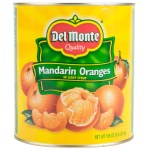
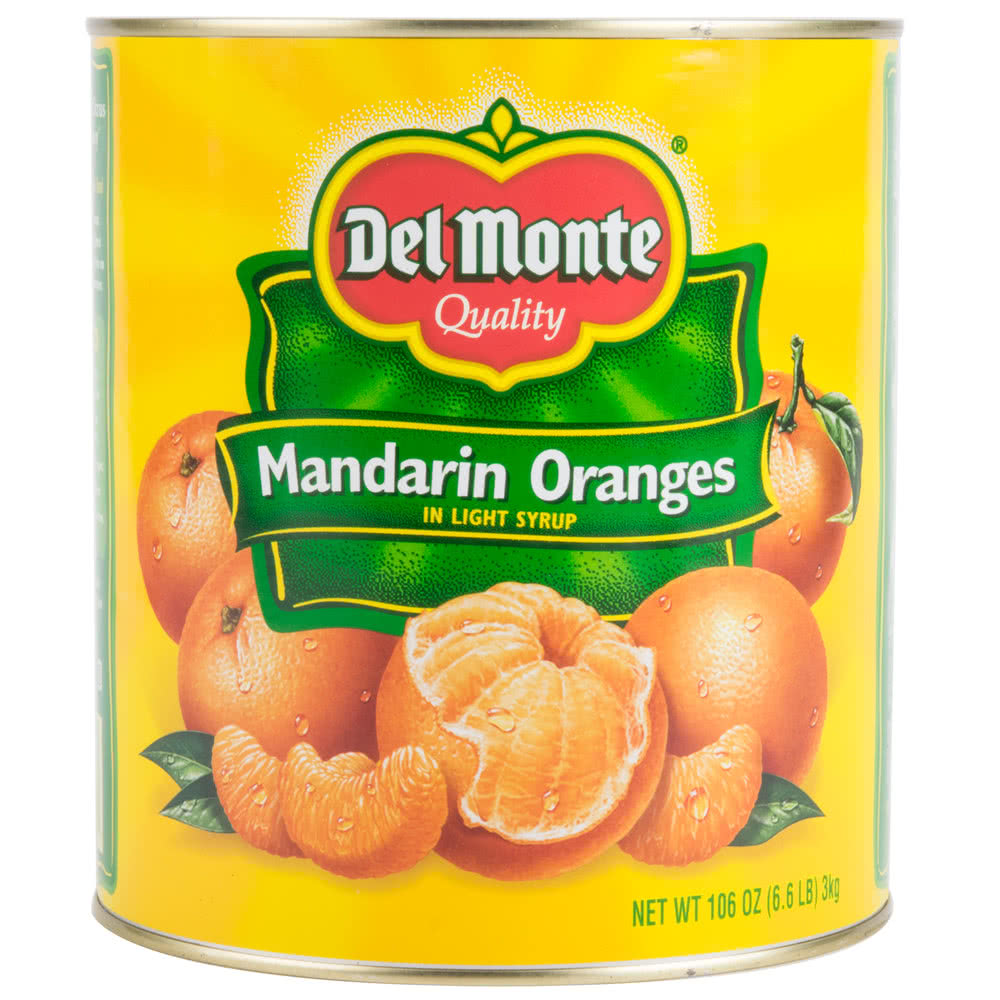
A bright yellow can with red and green that reads "Del Monte Mandarin Oranges in Light Syrup."

The can may or may not have appeared otherwise in 1969 but one truth endures: My mother would only have bought a name brand like this if she had a coupon for it.

Or so those darling cans of mandarin orange segments seemed to me, age four,  one grocery-shopping Wednesday morning after some sad holiday fruit salad had tipped me to their crisp succulence. I imagined, I yearned for, I needed a bowl of fruit salad composed of nothing but mandarin oranges. My mother, rather crisp herself and distracted by her shopping list, said it wasn’t possible.

All I wanted her to do was hold the fruit cocktail, canned fruit cocktail being the pallid concoction that she tarted up with chunked green apple, sliced banana, and (sigh) canned mandarin oranges. And then hold the apple and banana. That’s all I was asking her to do. Bring me a fruit salad, hold the fruit cocktail, hold the apple, hold the banana.

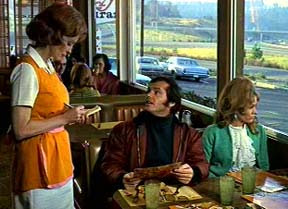
Screen shot from the film "Five Easy Pieces" in which Jack Nicholson's character tries in vain to order a breakfast combo but with wheat toast in place of the potatoes. The middle-aged waitress is pursing her lips as she is writing on her order pad. Jack is sitting in a booth next to Karen Black, who plays his girlfriend.

Five Easy Pieces, BBS Productions, 1970

Had it not been 1969, had it not been a Wednesday morning in the canned goods aisle of the Wegman’s closest to our house in Greece, New York — indeed, had I not been marooned in the seat of a shopping cart, her mini-me in our respective polyester stretch pants — this exchange with my mother could have exploded into a Five Easy Pieces type of situation. Instead, all that happened was I eyed the stacked cans of tantalizing citrus receding in the distance as my mother pushed us on toward condiments and instant soups while I pouted that my mother could have entire cans of mandarin oranges whenever she wanted and was choosing not to.

Continue reading

I’m Not Finished: Clam Roast, Victor, NY; Summer 1968

Photo of 2 blue and white dinner plates. Text: I'M NOT FINISHED, a personal encyclopedia gluttonica by Ingrid Tischer talesfromthecrip.org

Image courtesy eBay

The first in a series called I’m Not Finished: A Personal Encyclopedia Gluttonica.

In the realm of emotional bookkeeping, there is literally no number of doughnuts that equals the cost of picking up the check at a waterfront restaurant.

My maternal grandfather, Carl Pilbeam, remarried when I was almost three years old. I have but one fleeting memory of that afternoon: a group of us under a huge shade tree in front of Grandpa’s farmhouse, outside Victor, in upstate New York. What I do remember, in much more vivid scraps, is a summer night outdoors at the same farm right around that time, a few glaring spotlights, clanging, laughing, and the smell of smoke. I remember it was a clam roast because it was the only clam roast my family has ever had. And because clams at a clam roast are incredibly delicious.

I knew my grandfather as a man of constants until he died at the age of 97. The only incident I ever saw him lose his temper over had to do with a game of gin rummy. He was incurably sociable, a Rotarian and Friday Fish-Fry guy, and incapable of traveling anywhere without running into someone who recognized his heavy-set frame topped with a Napa cap on his bald head. He was an eater, big hungry country boy division, who specialized in ice cream, fruit pies, and the type of doughnut called a fried cake. When Grandpa went to buy doughnuts in the morning, so the family catechism went, one dozen were for the family and one dozen were for Grandpa’s drive home in the truck.

Continue reading

This Crip Stays in the Picture: A Past Plaintiff on Opposing H.R. 620, the ADA Notification Act

Colorful cartoonized portrait of Ingrid Tischer's face

This crip is staying in the picture of ADA litigation.

I’m Ingrid Tischer. You may remember me as “headless female torso using a walker” from Anderson Cooper’s “ADA Hit-Piece of Horror” on 60 Minutes. But I’m here today to tell you about a different type of horror: Being a plaintiff in an Americans with Disabilities Act (ADA) lawsuit, in which you’re presumed greedy and where whatever happened to you was no more than an inconvenience.

Four years ago, I began a multi-year metamorphosis into “non-vexatious litigant wanting to use a toilet.” That makes me the face of ADA lawsuits. But, in the 60 Minutes segment and the continuing slew of hand-wringing pieces about ADA scam-artists, you don’t see any faces like mine. A face like mine disrupts the narrative of the selfish — or gullible — cripple who financially kneecaps overwhelmed small business owners over access technicalities. You don’t hear much about how the proposed H.R. 620 would also apply to our considerably larger corporate citizens. So I’m putting my face right out there. This crip stays in the picture.

Despite the media’s fixation on “drive-by litigation,” — a completely non-accidental choice of phrase that associates fighting for my civil rights with gang violence – I was using the ADA as it was intended to be used, and should be used. As a civil rights law that, in 1990, made me a full US citizen at the age of 25. But in addition to the external changes in public spaces that have literally opened doors for me, the ADA is responsible for a profound internal shift in my thinking: I have expectations now that I didn’t grow up with: that I can enter a store, eat at a restaurant, cross a city street, open my office door.

Continue reading