Author: Ingrid Tischer


#WSPD2019: Suicide Is a Problem, Not a Solution for Living With a Disability. Yup, Even One That’s Neuromuscular, Progressive, and Degenerative
2018 2019 UPDATE: STILL ALIVE
STILL OPPOSED TO EUPHEMIZING DISABLED PEOPLE BY NORMALIZING OUR SUICIDES THROUGH LANGUAGE
I’m still disabled, still degenerating, and still filled with joie de crip, but even if I weren’t, I still wouldn’t be buying the double-speak that calls my suicide “a rational choice,” “death with dignity,” and “ending my life on my own terms,” while a (seemingly) nondisabled person’s suicide is “a public health problem.”
The terms we use in talking about an issue set the terms of the debate. Suicide is a public health problem. Distorting that through sophistry marketing language feeds suicide contagion.
September 10 is World Suicide Prevention Day. But for a disabled person like me, it’s just not my day. Literally.
Increasingly:
What would be a “threat of self-harm” for you, is a “personal choice” for me.
What calls for an intervention for you, calls for a pre-suicide party for me.
Your movie is It’s a Wonderful Life. My movie is It’s a Wonderful Death.
When it comes to people like me, suicide is rapidly becoming normalized. Or more exactly, suicide is being erased through re-branding. “It’s not ‘suicide’! It’s ‘ending your life on your own terms’!”
But I want a great pre-end of life. I want to live on my own terms.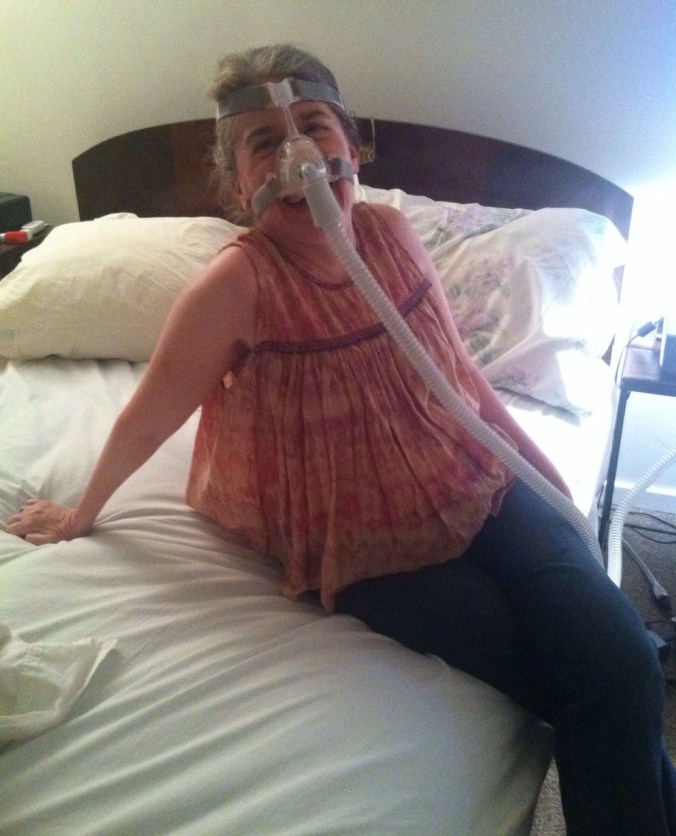

Dr. Nutone Reveals His Secret Identity

“Now I must confess. I must tell you my secret. I’m not a medical doctor. I’m a doctor of philosophy. But greater even that, I am a humble man. A proud Utilitarian.
“In the great tradition of the Enlightenment – a paradoxical name if you have come to believe like I have that the light of reason is too often used like a policeman’s flashlight pointed right at your eyes – I embraced utilitarianism, or as it is known in the common parlance as, “If it feels good, do it,” or “Something that feels so right could never be wrong.”
“I believed – no, I knew – that happiness was the most important thing because it was the true foundation for goodness. A good quality of life makes you happy, and measuring the quality of a life couldn’t be easier – is there an absence of a reason to be sad?
“I loved the effort and rigor of proving that happiness was what was easy, comfortable, familiar. I felt a responsibility to help end the suffering of people who will never know happiness because their lives are inherently difficult, uncomfortable, and filled with change, all of it really bad and pretty much a downer for everyone around them.
“I realized this when I was recovering from a difficult, uncomfortable, and unfamiliar mountain-climbing accident I had had right after I divorced my second wife because she wasn’t enough of a challenge for me and I was bored. After my injuries healed and I was a real person again, I had everything, a book-lined apartment, a light teaching load, and a beautiful dog and cat.
“It was a way I had never felt before. The simplest things were filled with enjoyment. Max and Emma were everything to me. Their lives, my life with theirs, demonstrated the nature of happiness. Taking care of them, guarding their happiness, was making me a good person. It all made perfect sense.
“I began to wonder why Max and Emma were considered lesser beings than my colleagues in the department, particularly the older ones and the guy with the hearing aid. I began to resent the condescending questions about my ‘pets.’
“One day at a faculty senate meeting, I had my awakening. Max and Emma’s consciousnesses were equal to that of my human colleagues. In some cases superior. They had, after all, achieved for themselves lives we might envy in their ease and comfort. What they lacked was respect from others. What they lacked were their rights.
“I wrote a book denouncing the human monopoly on consciousness, worth, and legal standing. I worked night and day to prove that ease, comfort, and familiarity are the hallmarks of a high quality of life. When my book hit the university bookstore’s bestseller list, I had the department eating out of my hand. What did I get at home for my pains? I’ll tell you. I got a dog I found eating my cat’s shit. He’d developed quite a taste for it. And she was no better, I swear she was filling that litter box like a buffet steam table just to spite me. It’s called copraphage, and apparently it’s quite common. This was not consciousness I could champion.
“I became bitter for a time. All of my hard work, pain, and venturing into the unknown to express the central utilitarian values of comfort, ease, familiarity, that the quality of life is equivalent to the quality of consciousness, had gone for nothing.
“I received a letter around that time from the doctor who treated me after my mountain-climbing accident. In reviewing his records after a lawsuit was filed against him, he found a small tumor in my brain x-ray he had missed before. Needless to say, he was quite concerned. This could really jeopardize his chances in the pending lawsuit. Negligence, how appropriate. I returned to see him and he removed the tumor immediately.
“This episode raised two interesting points. First, the tumor was not actually connected in any way to my accident. It could have gone undetected for years until its bulging dimensions caused me to black out, go into seizures, or compose full-length operas in the time it takes to heat a Lean Cuisine. So you might surmise that this ostensibly bad bit of experience – losing my grip on Capitan and becoming quadriplegic for nearly three days – was actually to my advantage. I had thought my only luck had been when the neurologist, a bottom-half sort who thought ‘futile care policies’ were something vassals brewed up for useless serfs, showed up for one more pin-prick exam before they pulled the plug as my eye-blinks were ordering them to do. I would have fallen off the bed in shock when I felt that jab in my left thigh if I’d, you know, been able to move.
“But as Doc Missedthetumor observed, it’s a good thing these neurologists rush from patient to patient or my wishes would have respected me right into the grave.
“An even stranger occurrence followed, though. I was awake during the surgery to remove the tumor, as is the normal procedure. They were doing a sort of color commentary to keep me posted on what was happening, probably going into too much technical detail because they thought the ‘Doctor’ before my name meant I was one of them. Just after the lead surgeon announced a clean excision, I lost all interest in the nature of consciousness. I couldn’t have cared less about the rights of animals, or people, or the distinction between sensation versus perception. If you told me, ‘The end justifies the means,’ I would have said, ‘Whatever.’ I started noticing how my personal experience was horning in on my objective arguments. I was filled with a desire to read Nietzsche, which wasn’t odd except that what I wanted was to read a few pages and then fight in public places about what I’d read. One day, I thought, ‘Well, that’s just the way it is,’ and it hit me. I wasn’t a philosopher anymore. I had become merely philosophical.
“Needless to say I was useless as a teacher. After a couple of years, my department head noticed the negative student evaluations – though they thought I’d make a great undergrad and had tremendous potential if I’d only apply myself – and called me in. I came clean. Confessed I had a condition that disabled me as a philosopher. It felt so good to finally be open about it. Hobbs was kind, asked me how I was doing, told me he’d suspected something was wrong but felt it was a private matter best left unremarked.
“When I assured him I had stopped struggling and was learning to live with my limitation, his demeanor changed. He became more officious and said he needed to reflect upon the situation. We would speak soon. At first I was nervous but my now-habitual philosophical attitude was in control. I simply thought, ‘Whatever will be, will be,’ instead of grinding each word Hobbs had spoken into a fine powder in search of his first principles. Because I’d forgotten Hobbs didn’t really have any first principles.
“We never spoke again. The university sent me a letter of separation, stating that because I was unable to perform the essential tasks of my position, I was relieved of all teaching duties and publishing expectations. Because I had tenure they couldn’t dismiss me; they recognized I had a discipline-related disability that was beyond my control. I was welcome at all social events and meetings, but they could not reasonably accommodate me and my take-it-as-it-comes reactions.
“The real issue, of course, was liability. The department was small and already had few students. Parents didn’t like their kids majoring in philosophy. If word got out that I wasn’t harping on distinctions between being and Being, or my bioethics class was questioning its own preconceptions about ‘happiness’ or ‘personhood,’ rather than debating how many days a disabled infant’s parents have to decide whether to end the child’s life, those parents might start to ask why they were pouring money into a philosophy education and getting nothing more than sociology.
“Naturally, I sued the university. Naturally, I lost, it being a disability case. I was left with no career, a shit-eating dog, a crap-happy cat, and an apartment I could barely afford after the lawsuit. At first it didn’t get to me. Something will work out, I said. My book was still selling. I thought it was the most ridiculous piece of trash ever written, but I had to eat, as I put it so philosophically.
“But the lawsuit taught me something valuable: how enjoyable it was to bother someone else. Even though I lost, I had been something of a disturbance, and that pleased me. I had to make a fresh start, reinvent myself again. So I took every penny I had, hired the most cutthroat attorney I knew (a former student of mine, actually) and sued the bejesus out of Doc Missedthetumor.
“This time I won. Well, settled big. Personal injury always has an edge on individual rights. Doc Missedthetumor quit medicine and opened a one-hour photo where his film-reading skills were finally in an appropriate environment. Doc claims to be a much happier man now, after me dragging him through the mud. He told me this by saying I ruined his life. He even threatened me, a true sign of our bond. He warned me that the tumor could grow back, that it may already be pressing on another lobe and distorting my thinking in some new and possibly unsavory way. He opened my eyes to what I’ve come to call Transcendental Misanthropy. I keep his letter to me as a testimonial, in case I ever need to file a restraining order.”
[To Be Continued]
There’s No Cure for Gretchen Lowe is an unpublished coming-of-middle-age crip lit novel. Within the broader realm of literature featuring characters with disabilities — #DisLit and memoir — #CripLit presents an understanding of disability using the lens of the social model. It eschews disability as a narrative device and shortcut for conveying sentimentality, heroism, and disaster to readers.
And Now a Word from the FuckAbility™ Research Council on Joaquin Phoenix in “He Won’t Get Far on Foot”: For Your Condescension
Matt Damon Hails Diversity in Gus Van Sant’s Narrative, Says: Don’t Worry, Casting Joaquin Phoenix in Your Story of Charles Bukowski John Callahan, an Angry, Alcoholic, Tortured-Artist White Guy With an Adoring and Need-Free Girlfriend Who Supports His Artistry Is Totally a Fresh Take and Janky Wheelchair Is a Genius Casting Choice, Lending Rare Authenticity to the Project, and Giving a Raw Performance of Startling Gravitas Seldom Seen From a Piece of Durable Medical Equipment (DME)
Also: Muffin Baskets of Condolence for the Death of Any Attempt to Cast Disabled Actors or, Like, Even One of the [NUMBER REDACTED] Wheelchair-Using Actors Currently in the Business of Show, May Be Sent to the “Association to Raise Awareness of Disability Awareness in the Entertainment Industry” at Their Offices, Which Are, No Doubt, Located on the Second Floor of a Building Without An Elevator.
FOR YOUR CONDESCENSION, we present:
Wheelchair Barfly
DISCLAIMER: All snark, snottiness, sarcasm, and snappy sardonicism contained therein is directed solely at Gus Van Sant’s directorial choices regarding He Won’t Get Far on Foot (originally titled, My Own Private Solipsism) and not toward John Callahan, who was, in FARC’s opinion, one funny fucker. Even when he was wrong, he was hilariously wrong:
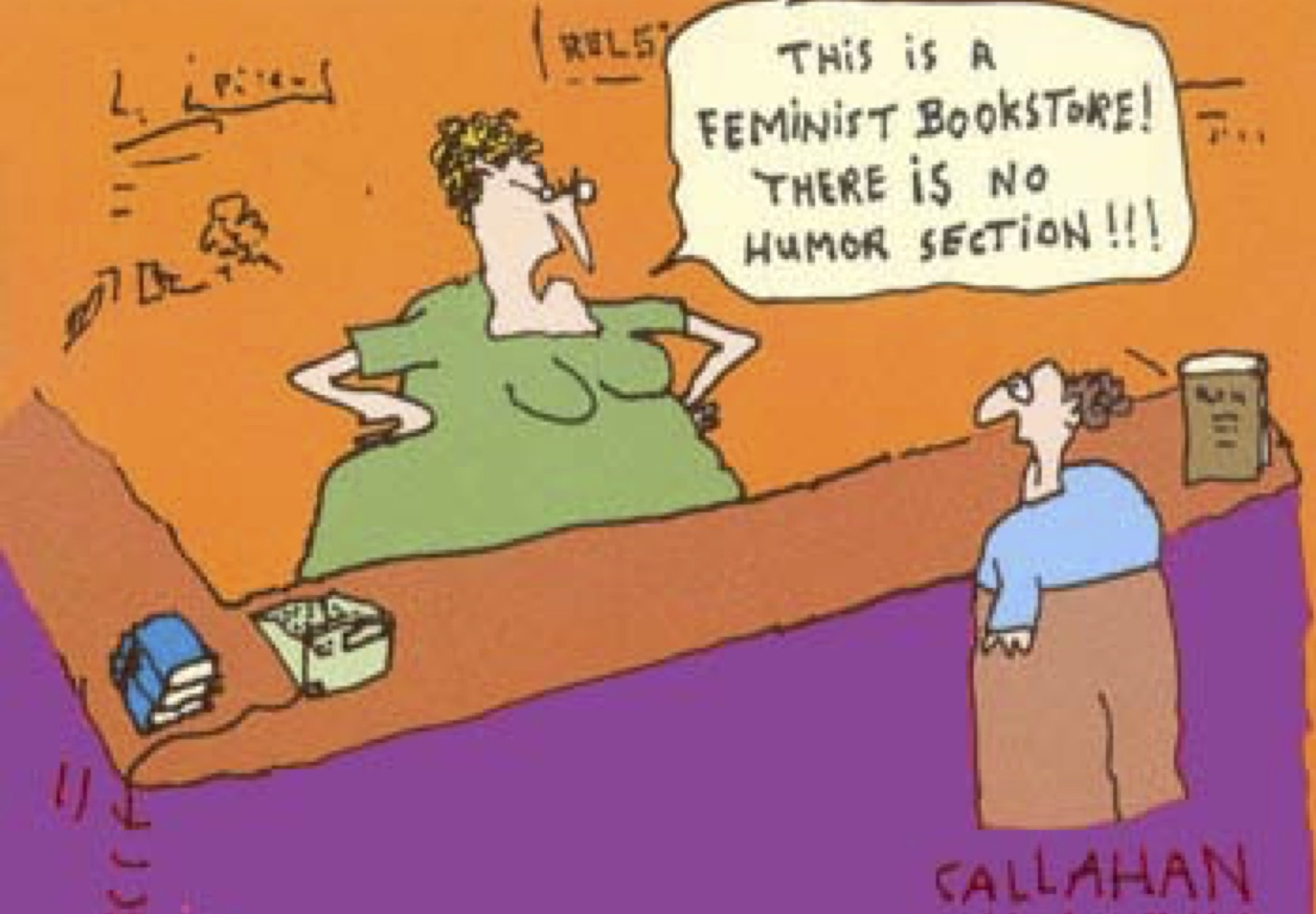
Courtesy John Callahan
FuckAbility™ Research Council (FARC) is a piece of letterhead housed on the Tales From the Crip website. FARC’s mission is to raise awareness of hollywood’s lack of awareness that many disabled adults fuck in groups of one or more. All views expressed are subject to change and denial.
Letters to a Young Fundraiser: The Philanthropeon Wars and the Fall of Telethonika

 Tales From the Crip