It is a truth universally acknowledged that a woman in possession of a neurodegenerative disease must be in want of an early death.
My dear Miss Cripple,
Madam, in vain I have struggled. It will not do. My feelings will not be repressed. You must allow me to tell you how ardently I pity you and plead you to accept my assistance in hastening your death.
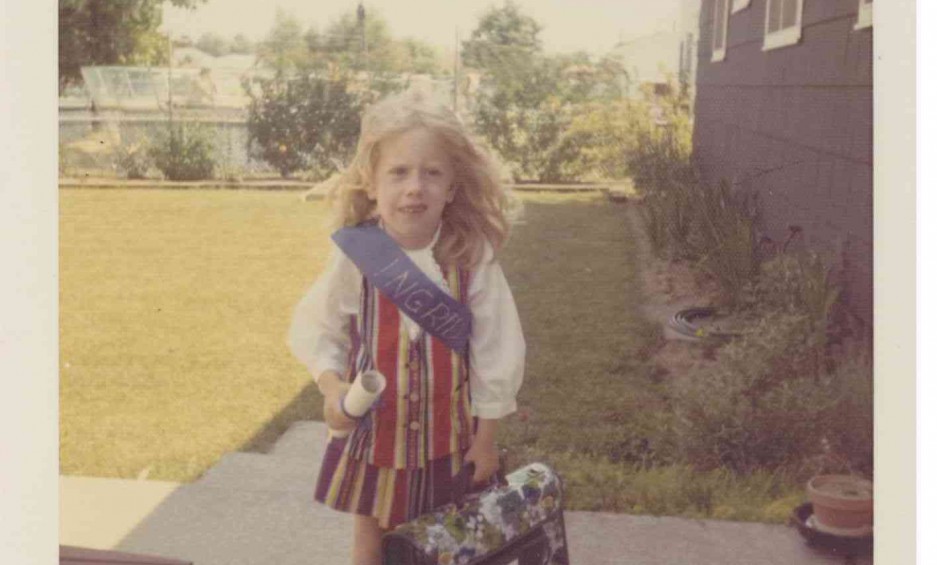
Ingrid Tischer on the day of her kindergarten graduation in Greece, New York, circa 1970. She is wearing a rainbow vest and skirt sewn by her mom. Note the clutching of the diploma and school-bestowed book-bag, and anxious expression — all indicate a future in literary fiction writing and nonprofit fundraising.
If the grand success of the 20th century was the rise of disability as an accepted political identity, we intend for the 21st century to be the time when disability is recognized as the constant but hidden variable in nearly all formulas for global human rights.
Including disability as a given factor in most people’s lives is essential to successfully advancing the human rights of people in minority communities; survivors of violence in the home, the school, and the street, and/or conflict zones, and as veterans; immigrant and refugees held in detention, incarcerated people, people coerced into institutionalization; people who live with chronic and catastrophic illness; neuro-diverse people; people who are young and old; male, female, and everywhere on the gender spectrum.
While disability has been understood as “different and divided” I believe it can come to be seen as “unique and united.”
As you sit sweating under an increasingly sweltering sun this day, feeling the inevitable effects of a wasteful attitude toward natural resources, you may not be thinking of another type of catastrophic loss caused by another type of massive denial. I speak of almost no one’s favorite topic: Disability.
How denying disability’s central role in just about every human life relegates significant chunks of our lives — and worse still, people-sized chunks — to the rubbish heap. It may be that “disabled” doesn’t feel like a word that fits who you are. Fine. Have you ever felt vulnerable? Think of “vulnerable” as a gateway word to a chronic case of disability-speak.
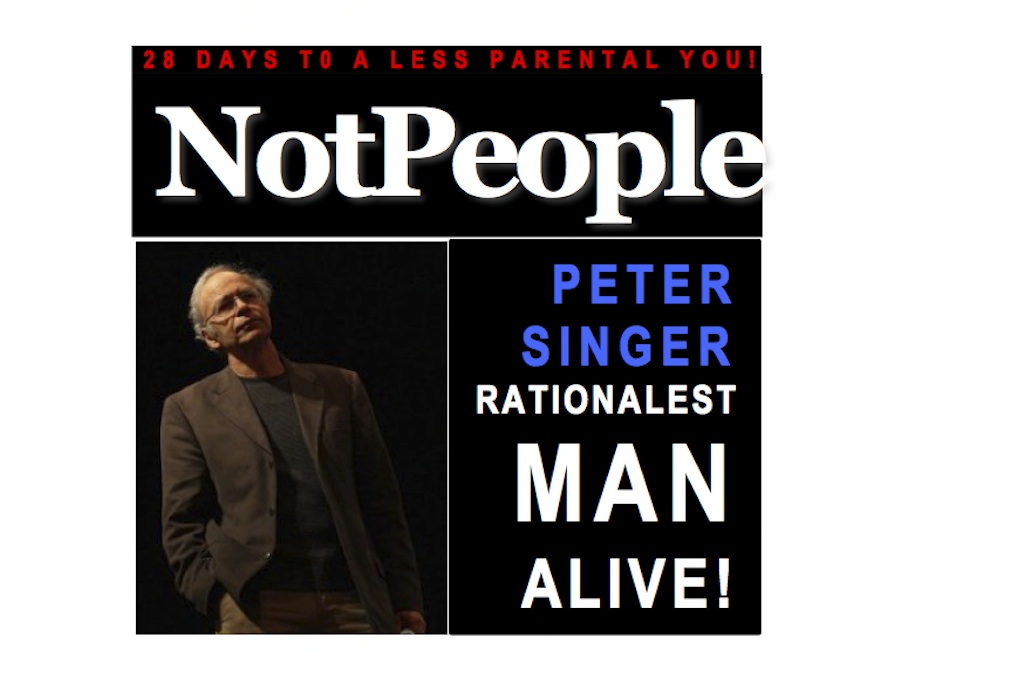
As part of Tales From the Crip’s new series, Imaginary Interviews With People Who We Wish Were Imaginary, our own Respironics Bi-Pap S/T sat down with philosopher Dr. Peter Singer, Princeton’s Ira W. DeCamp Professor of Bioethics, whose anti-crip, pro-swine agenda argues that infanticide of babies with disabilities should be legal up until the 28th day after birth, that health care for people with disabilities should be rationed, and that the consciousness of some pigs doesn’t get enough respect. These fascis — fascinating ideas are just the tip of the iceberg of why Peter Singer is gracing the cover of NotPeople magazine as the Rationalest Man Alive!
RBPS/T: Welcome to the United States, Dr. Peter Singer, and all Bruces from Australia.
PS: G’day.
RBPS/T: We’re going to have a rational discussion!
PS: Rational.
RBPS/T: Rational.
PS: Rational.
RBPS/T: You’ve been named NotPeople’s Rationalest Man Alive 2015. How does this make you feel?
“Your bizarre stereotypes about Australian people are getting in the way of me explaining why infanticide is the rational choice for parents of disabled infants!”

 Tales From the Crip