#WSPD2016: Suicide Is a Problem, Not a Solution for Living With a Disability. Yup, Even One That’s Neuromuscular, Progressive, and Degenerative

September 10 is World Suicide Prevention Day. But for a disabled person like me,  it’s just not my day.

Increasingly:

What would be a “threat of self-harm” for you, is a “personal choice” for me.

What calls for an intervention for you, calls for a pre-suicide party for me.

Your movie is It’s a Wonderful Life. My movie is It’s a Wonderful Death.

When it comes to people like me, suicide is rapidly becoming normalized. Or more exactly, suicide is being erased through re-branding. “It’s not ‘suicide’! It’s ‘ending your life on your own terms’!”

But I want a great pre-end of life. I want to live on my own terms.Ingrid posing with her Respironics Bi-Pap S/T

Continue reading

My Speech to the Graduates, or What I Wish I’d Known As a 5 Year-Old Crip

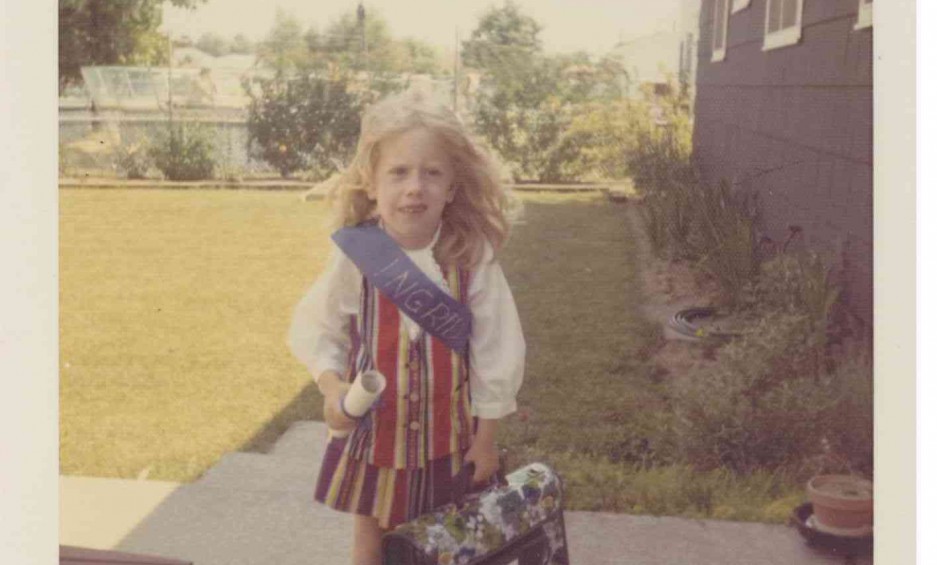
Ingrid Tischer on the day of her kindergarten graduation in Greece, New York, circa 1969. She is wearing a rainbow vest and skirt sown by her mom. Note the clutching of the diploma and school-bestowed book-bag, and anxious expression -- all indicate a future in literary fiction writing and nonprofit fundraising.

Ingrid Tischer on the day of her kindergarten graduation in Greece, New York, circa 1970. She is wearing a rainbow vest and skirt sewn by her mom. Note the clutching of the diploma and school-bestowed book-bag, and anxious expression — all indicate a future in literary fiction writing and nonprofit fundraising.


If the grand success of the 20th century was the rise of disability as an accepted political identity, we intend for the 21st century to be the time when disability is recognized as the constant but hidden variable in nearly all formulas for global human rights.
Including disability as a given factor in most people’s lives is essential to successfully advancing the human rights of people in minority communities; survivors of violence in the home, the school, and the street, and/or conflict zones, and as veterans; immigrant and refugees held in detention, incarcerated people, people coerced into institutionalization; people who live with chronic and catastrophic illness; neuro-diverse people; people who are young and old; male, female, and everywhere on the gender spectrum.
While disability has been understood as “different and divided” I believe it can come to be seen as “unique and united.”

As you sit sweating under an increasingly sweltering sun this day, feeling the inevitable effects of a wasteful attitude toward natural resources, you may not be thinking of another type of catastrophic loss caused by another type of massive denial. I speak of almost no one’s favorite topic: Disability.

How denying disability’s central role in just about every human life relegates significant chunks of our lives — and worse still, people-sized chunks — to the rubbish heap. It may be that “disabled” doesn’t feel like a word that fits who you are. Fine. Have you ever felt vulnerable? Think of “vulnerable” as a gateway word to a chronic case of disability-speak.

Continue reading

From Recipes for Inclusive Education, Chapter 6, “Braises and Roasts”

Far from protesting, many an Infirm Child’s eyes shine with an Inner Light at mention of this most noble purpose their otherwise wasted bodies can serve. There are Disabled Children not as wholly selfish as their Disabled brethren who would demand survival, even education and employment, at the expense of their Normal brothers. But good it is to look upon the Infirm Child going cheerfully to the cook-pot to feed the strength of the Normal Child whose rude health is testament to his good character and his Creator’s Pleasure in him.
Color photo of Betsy DeVos, an older white woman, talking animatedly, her excitement presumably over the prospect of destroying the federal civil rights of students with disabilities without even understanding how laws work.

UPDATE: (Salem Village, Massachussetts Bay Colony, January 18, 1617,) Goody DeVos, beloved of GOD as evidenced by her billions, testifying before Congress about the importance of parents being able to choose their disabled children’s schools without mentioning either that: 1) some parents would choose such things as a ducking stool to see if their child’s disability is a “real” one; or 2) choosing that charter dame school the next colony over means they lose their due process rights if the charter school beats their kid for not being able to read his horn book or whatever. Photo courtefy of Salon.

Nature and her master THE LORD have blessed the Educator with ease in beginning any recipe for inclusion, ‘Step One of How to Cook a Disabled Child: Catch a disabled child.’ Truly, the Infirm Child’s emfeeblement makes him an ideal choice for the inexperienced Educator new to his twin masters Efficiency and Economy.

When you have your specimen, consider your various cooking options as well as how many Normal Children you have to feed. Is the Infirm Child plump and well-larded? If this be the case, wrap the lad’s loin with the finest bacon and roast in a hot oven, a dish fit to serve at term’s end to celebrate the holiday.

Continue reading