#CripTheVote: You Have Hillary Clinton to Blame for This Blog Post

For the first time in my 50 years on July 28, 2016, I heard my disabled childhood described through the civil rights lens by a presidential candidate, Hillary Clinton. She centered my childhood where I would have: on education and public schools.

It’s difficult to explain the magnitude of hearing my disability identity described in the language of equal rights and not special needs. As meaningful as it was to see a woman accepting the nomination, the tectonic shift I felt was in Clinton accepting me as I am: as a person who deserves respect and can serve the greater good. Not as a diagnosis who has nothing to give or a vote to cast. Certainly not as a target to mock whose vote is irrelevant. Because I have gained my right to an education, I gladly accept the responsibility that comes with answering these two questions:
What do I want to contribute to that is bigger than myself? What is it that I have to contribute?
In using the education that Hillary Clinton and other disability rights advocates fought for, I have a shot at becoming a role model who works together with others rather than being labeled an “inspiration” who is kept at a distance.
The story of childhood is the story of education. The access to and quality of education determines whether that story is one you want to retell over and over, or one that threatens to scare you into silence. The school-to-prison pipeline and the violence that students of color with disabilities experience in the name of “discipline” are the education issues that need urgent action today. I appreciate Clinton’s past work because I see potential in it for protecting the rights of more children and youth with disabilities.
B/w photo of a little boy and younger girl sitting. Both smile and the boy is giving the girl a mischievous sideways glance.

The author and her older brother. Hillary Clinton said, “Every kid with a disability has the right to go to school.” That was an idea – not the law – in 1967 when this photo was taken. Three years later, this little girl could not start first grade at the neighborhood school where her older brother went. The school had a pet rabbit named Pugsly. Inclusion: DENIED. An education: DENIED. A bunny to pet: DENIED.
Continue reading

My Speech to the Graduates, or What I Wish I’d Known As a 5 Year-Old Crip

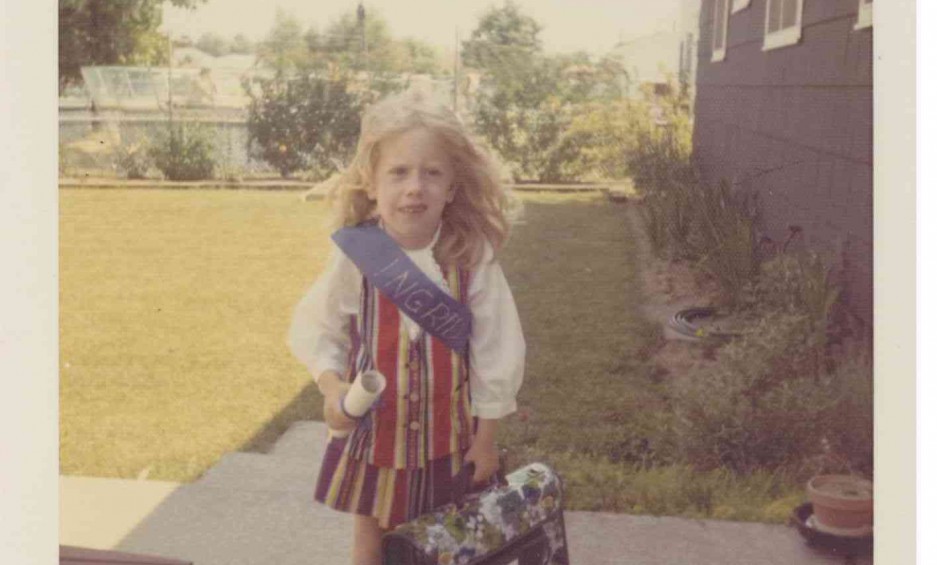
Ingrid Tischer on the day of her kindergarten graduation in Greece, New York, circa 1969. She is wearing a rainbow vest and skirt sown by her mom. Note the clutching of the diploma and school-bestowed book-bag, and anxious expression -- all indicate a future in literary fiction writing and nonprofit fundraising.

Ingrid Tischer on the day of her kindergarten graduation in Greece, New York, circa 1970. She is wearing a rainbow vest and skirt sewn by her mom. Note the clutching of the diploma and school-bestowed book-bag, and anxious expression — all indicate a future in literary fiction writing and nonprofit fundraising.


If the grand success of the 20th century was the rise of disability as an accepted political identity, we intend for the 21st century to be the time when disability is recognized as the constant but hidden variable in nearly all formulas for global human rights.
Including disability as a given factor in most people’s lives is essential to successfully advancing the human rights of people in minority communities; survivors of violence in the home, the school, and the street, and/or conflict zones, and as veterans; immigrant and refugees held in detention, incarcerated people, people coerced into institutionalization; people who live with chronic and catastrophic illness; neuro-diverse people; people who are young and old; male, female, and everywhere on the gender spectrum.
While disability has been understood as “different and divided” I believe it can come to be seen as “unique and united.”

As you sit sweating under an increasingly sweltering sun this day, feeling the inevitable effects of a wasteful attitude toward natural resources, you may not be thinking of another type of catastrophic loss caused by another type of massive denial. I speak of almost no one’s favorite topic: Disability.

How denying disability’s central role in just about every human life relegates significant chunks of our lives — and worse still, people-sized chunks — to the rubbish heap. It may be that “disabled” doesn’t feel like a word that fits who you are. Fine. Have you ever felt vulnerable? Think of “vulnerable” as a gateway word to a chronic case of disability-speak.

Continue reading