
When your organization’s fundraising tactics undermine your mission – as dehumanizing your own people does – your fundraiser efforts can only be judged a failure. No matter how much money you raise.
When your organization’s fundraising tactics undermine your mission – as dehumanizing your own people does – your fundraiser efforts can only be judged a failure. No matter how much money you raise.
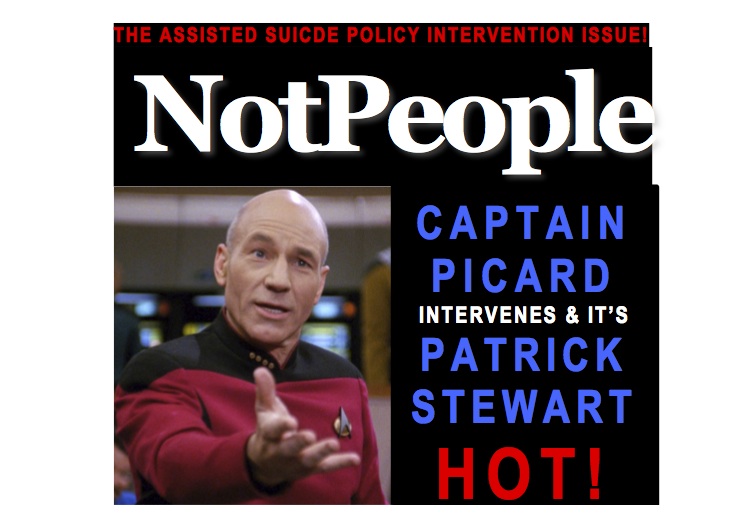 Captain’s Log: Stardate 20150808.naptime. The Enterprise is en route after refueling at Carnitas in the Al-Pastor system, but before reaching the Reflux Cluster, we’ve picked up a warning call from the Federation ship Ventilator. The decoded message tells us that a pro-assisted suicide ship, The Good Death, is in the vicinity. We’ve sent them the standard response, U-1st, but The Good Death remains as quiet as a tomb. Then it suddenly appeared on the Bridge’s screen.
 “Tell me what I’m looking at on the screen and how that man can STILL be so damnably handsome.”
Ingrid Tischer on the day of her kindergarten graduation in Greece, New York, circa 1970. She is wearing a rainbow vest and skirt sewn by her mom. Note the clutching of the diploma and school-bestowed book-bag, and anxious expression — all indicate a future in literary fiction writing and nonprofit fundraising.
As you sit sweating under an increasingly sweltering sun this day, feeling the inevitable effects of a wasteful attitude toward natural resources, you may not be thinking of another type of catastrophic loss caused by another type of massive denial. I speak of almost no one’s favorite topic: Disability.
How denying disability’s central role in just about every human life relegates significant chunks of our lives — and worse still, people-sized chunks — to the rubbish heap. It may be that “disabled” doesn’t feel like a word that fits who you are. Fine. Have you ever felt vulnerable? Think of “vulnerable” as a gateway word to a chronic case of disability-speak.
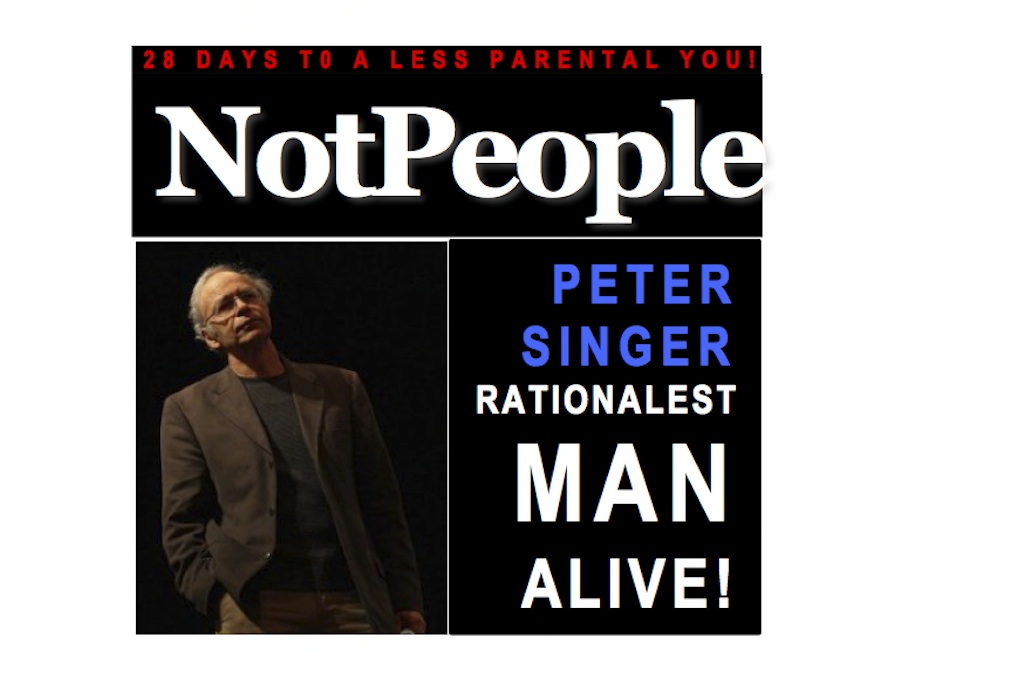 As part of Tales From the Crip’s new series, Imaginary Interviews With People Who We Wish Were Imaginary, our own Respironics Bi-Pap S/T sat down with philosopher Dr. Peter Singer, Princeton’s Ira W. DeCamp Professor of Bioethics, whose anti-crip, pro-swine agenda argues that infanticide of babies with disabilities should be legal up until the 28th day after birth, that health care for people with disabilities should be rationed, and that the consciousness of some pigs doesn’t get enough respect. These fascis — fascinating ideas are just the tip of the iceberg of why Peter Singer is gracing the cover of NotPeople magazine as the Rationalest Man Alive!
RBPS/T: Welcome to the United States, Dr. Peter Singer, and all Bruces from Australia.
PS: G’day.
RBPS/T: We’re going to have a rational discussion!
PS: Rational.
RBPS/T: Rational.
PS: Rational.
RBPS/T: You’ve been named NotPeople’s Rationalest Man Alive 2015. How does this make you feel?
PS: Rational.
RBPS/T: Any plans for keeping the title in 2016?
PS: I don’t make plans more than 28 days ahead.
Coming Up in the Interview!
Peter Singer as you’ve never heard him!
“Your bizarre stereotypes about Australian people are getting in the way of me explaining why infanticide is the rational choice for parents of disabled infants!”
All of us know that our healthcare options are limited by the boundaries set by a for-profit healthcare industry. I’m justifiably skeptical of proposed assisted suicide legislation that was written and supported by the healthcare industry. Particularly when they are marketing it as a civil right that just happens to be the $300 alternative to more costly options.
Assisted suicide legislation, modeled on Oregon’s law, is once again up for a vote in the state where I live. I look at assisted suicide legislation as a public health issue that will affect thousands of people in the state of California alone. Consider just three factors in combination:
1) California’s fastest growing demographic is people age 60 and up.
2) Elder abuse is on the rise while investigating agencies such as Adult Protective Services (APS) caseworkers are already dealing with unmanageable caseloads.
3) A physician is not required to be present when assisted suicide drugs are taken but an heir may be present and help administer them. (“Self-administer” is a term that does, in fact, allow for assistance in taking the drugs.)
This is the real-world context where proposed assisted suicide legislation would be implemented. All of us know that our healthcare options are limited by the boundaries set by a for-profit healthcare Continue reading
 Tales From the Crip